


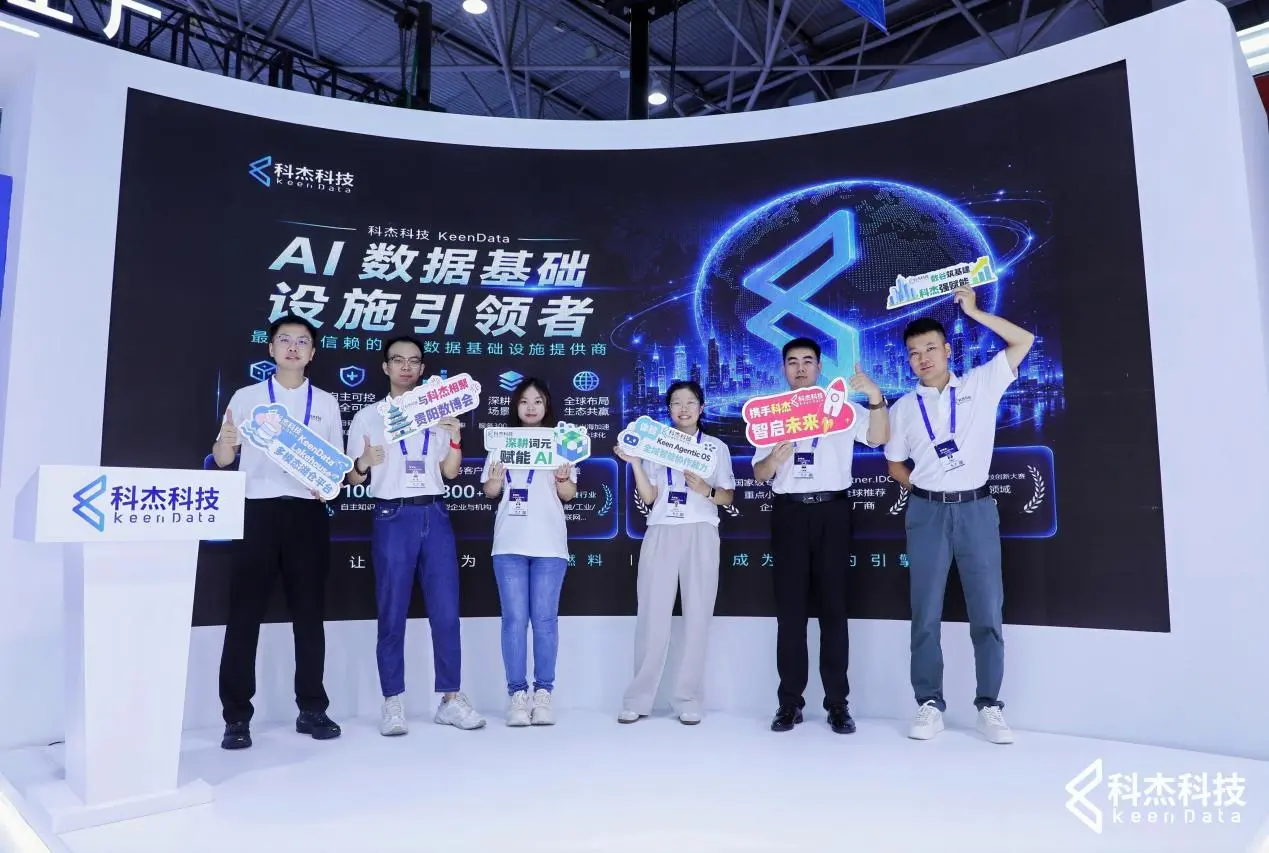
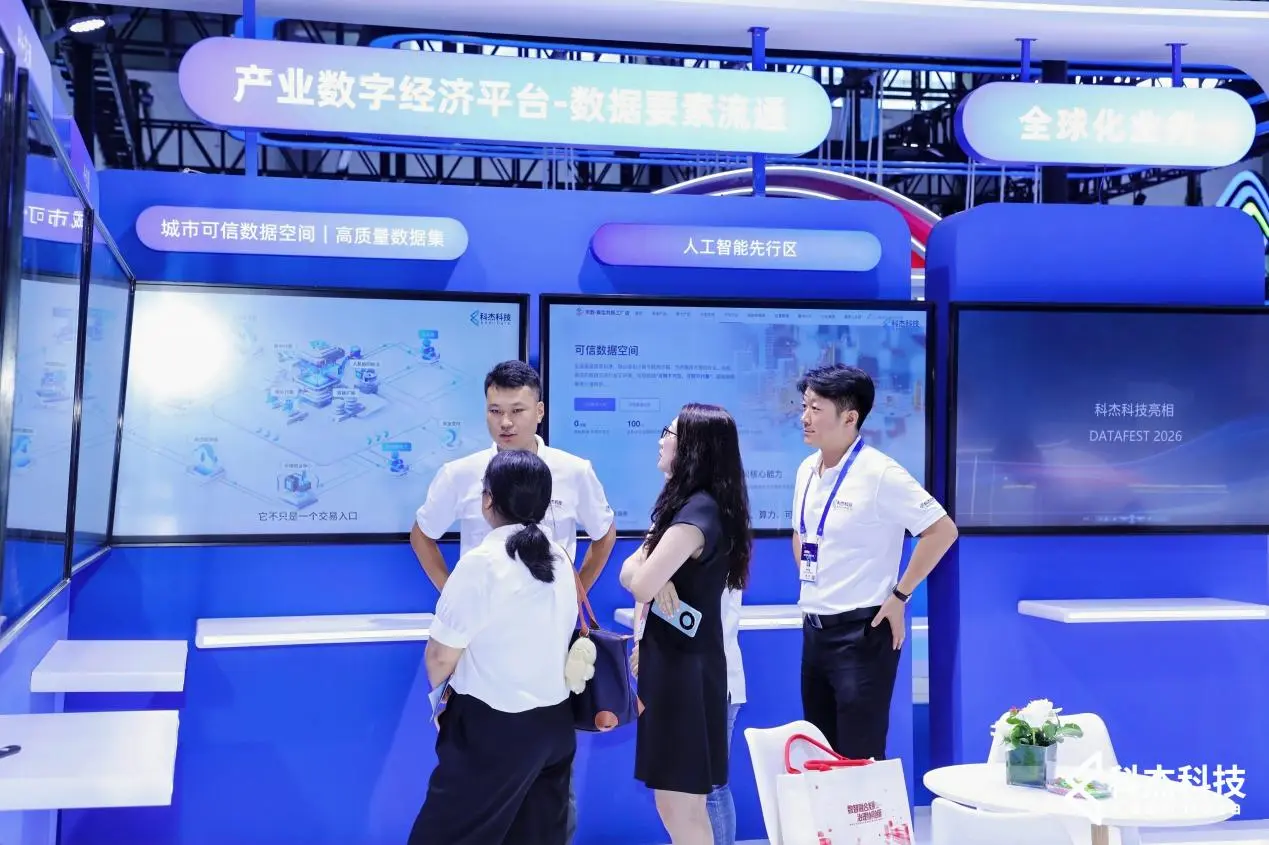
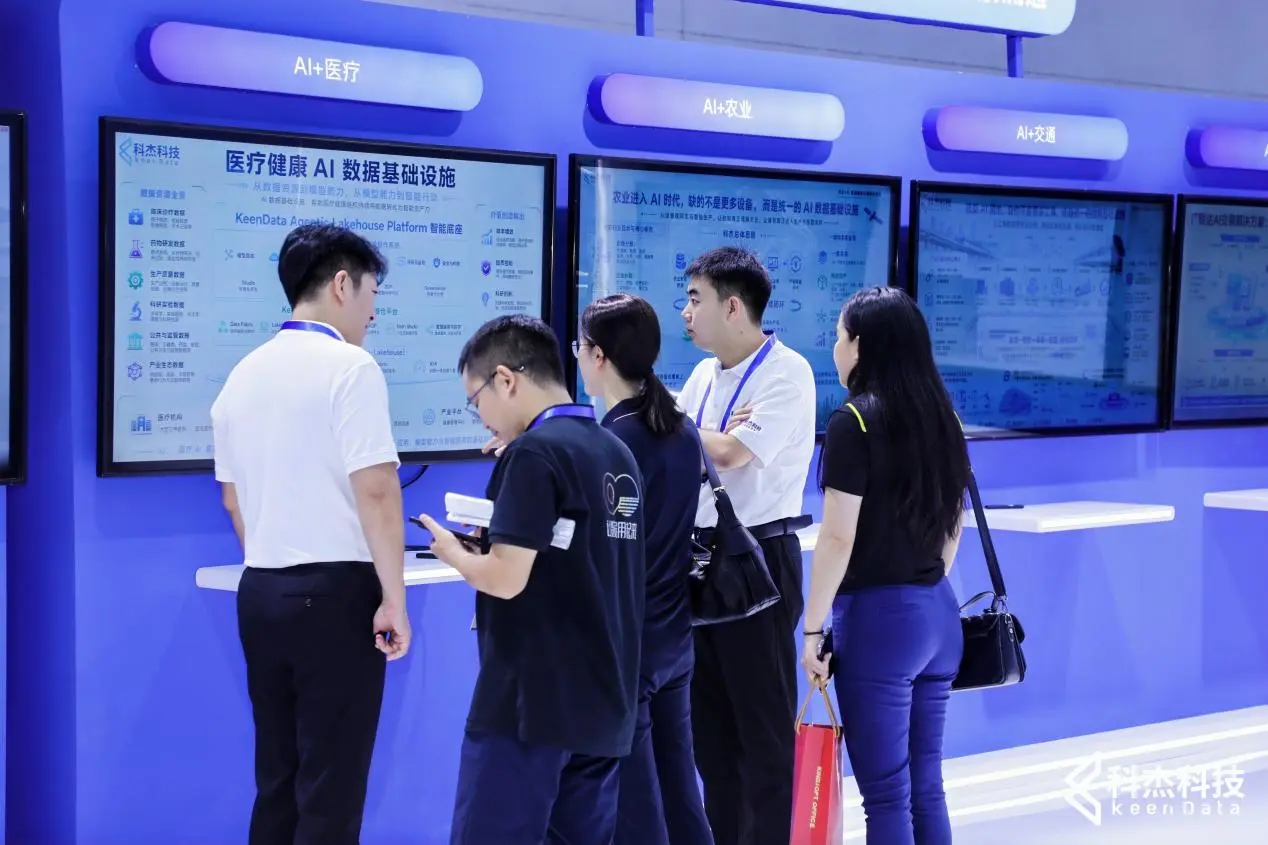
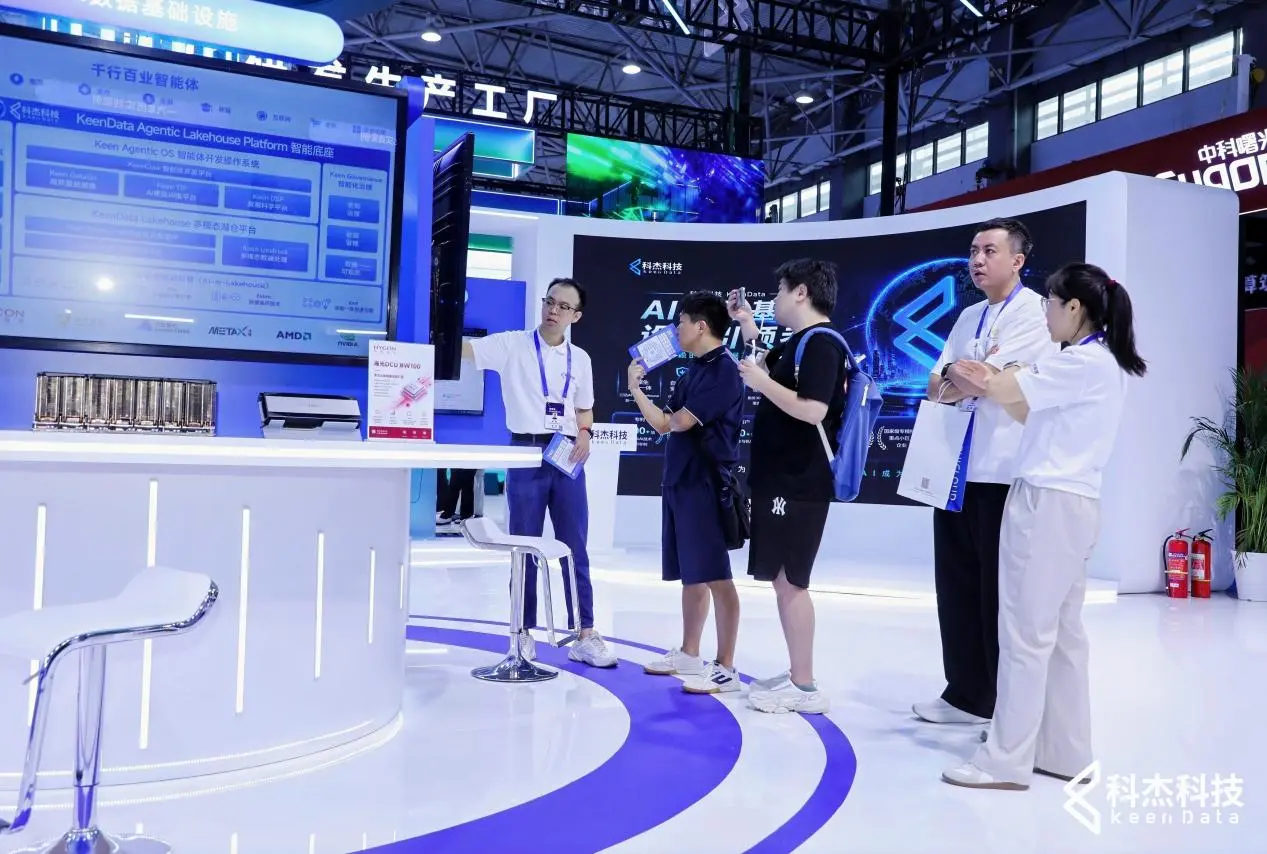
On August 27, the 2026 China International Big Data Industry Expo opened in Guiyang. Under the theme "Token — A New Path to Unlocking the Value of Data Elements," this year's Expo marked a significant event in the data industry at the outset of the 15th Five-Year Plan period. KeenData presented its KeenData Lakehouse multimodal lakehouse platform, the Keen Agentic OS intelligent agent development operating system, and full-stack data intelligence solutions for large enterprises and government agencies. The company was also invited to participate in multiple high-profile forums and seminars throughout the Expo. From data supply for embodied intelligence to digital-government collaboration, KeenData demonstrated its technological depth and industry insights in AI data infrastructure and intelligent agents through wide-ranging engagement.

Fueling Embodied Intelligence with AI Data Elements
At the Gui'an New Area Embodied Intelligence Data Elements Industry Seminar and Investor Exchange, KeenData's founder and chairman, Yu Yang, was invited to join a closed-door roundtable discussion. Embodied intelligence is seen as a critical leap for AI, moving from the "purely digital world" into the "physical world." Behind this transition lies the need for a continuous supply of high-quality training data.
Yu Yang explored the full lifecycle data requirements of the embodied intelligence industry, covering data sourcing, processing, storage, and circulation. He articulated how data elements serve as the core "fuel" that moves embodied intelligence from the lab to large-scale industrial deployment. He noted that without high-quality data supply, embodied intelligence lacks the raw material to function, and that KeenData's long-standing expertise in data governance, lakehouse platforms, and AI data infrastructure positions it as a critical enabler of this industrial shift.
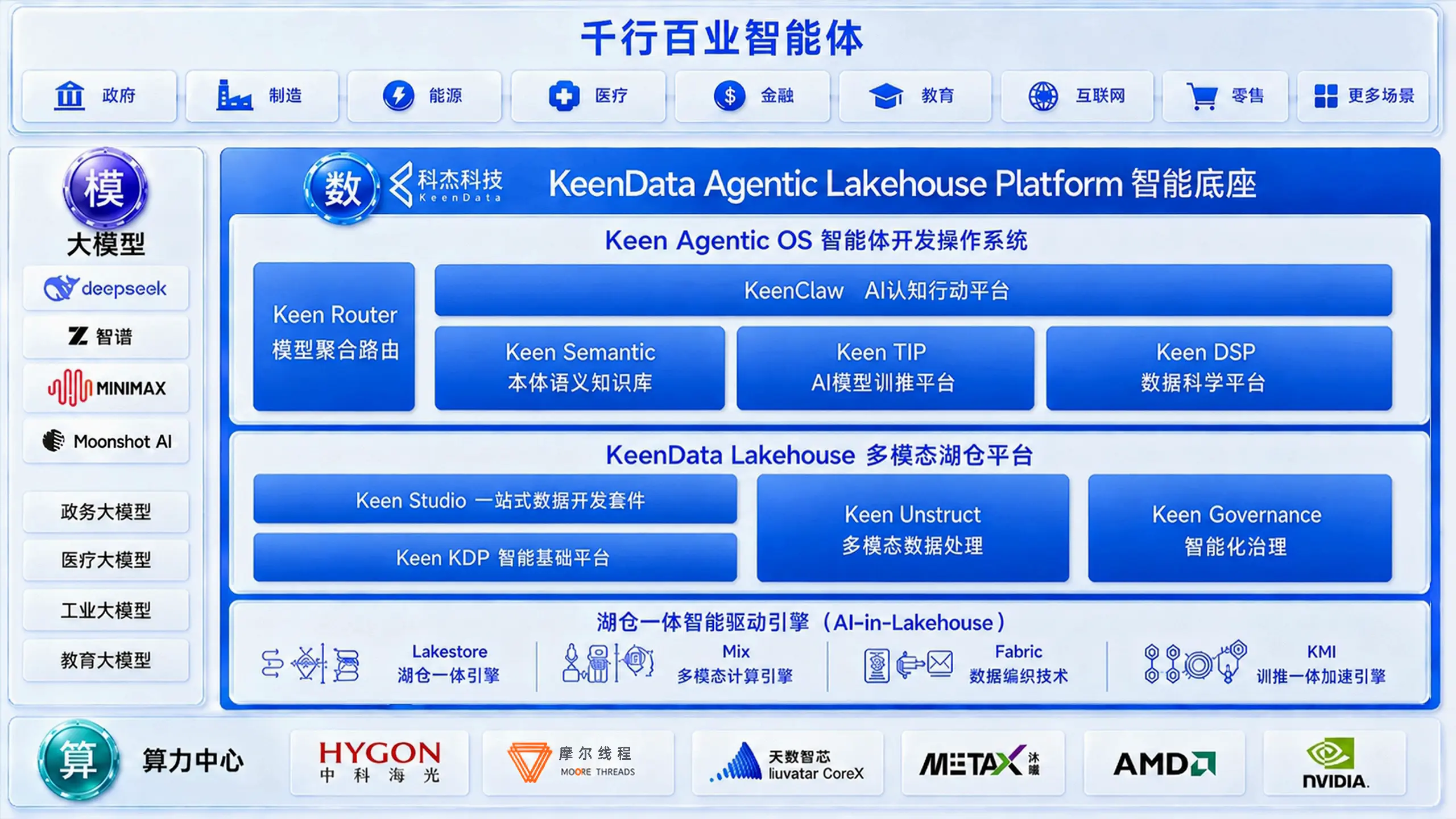
Yu Yang further emphasized that embodied intelligence needs a full "data-model-agent" AI data infrastructure to transition from lab to scale. KeenData's proprietary KeenData Lakehouse multimodal lakehouse platform supports the end-to-end pipeline from multi-source physical data collection and governance to circulation. The newly launched Keen Agentic OS, through its three core modules — the Training-Inference Integration Engine, KeenClaw, and KeenRouter — systematically addresses three critical challenges in embodied intelligence: multi-source physical data is "available but not readily usable," the "data-model-physical agent" closed loop remains broken, and secure, trustworthy data circulation mechanisms are lacking. Yu Yang stated that KeenData is building this infrastructure to help embodied intelligence overcome data bottlenecks and accelerate its journey from technical validation to industrial deployment.
Building New Data Infrastructure for the Age of AI Industrialization
As AI technologies penetrate a broader range of industries, the demands on data infrastructure have evolved from simple data supply to full lifecycle capabilities spanning data production, model training, and agent development and validation. At the Guizhou Digital Intelligence Industry Exchange and Supply-Demand Matchmaking Conference, Zhu Jianyong, Vice President of KeenData, delivered a presentation on "New Infrastructure for the Age of AI Industrialization." He introduced the core concept of "continuously transforming data into intelligence, and continuously embedding intelligence into industry." He pointed out that the industry faces three fundamental challenges: Can data be reliably supplied to AI? Can models truly understand industries? Can intelligent agents and embodied intelligence execute real-world tasks? The root cause, he argued, lies in the lack of an intelligent production system built around a "data factory" and a "model-data factory." KeenData, with its AI-native lakehouse architecture as the foundation, supports robot and agent data and capability needs upstream, while downstream it unifies data collection, annotation, governance, and trusted circulation. By organizing production factors around compute, data, models, and actions, it transforms complex multimodal data into AI production assets that can be trained, invoked by agents, and learned by embodied intelligence systems.
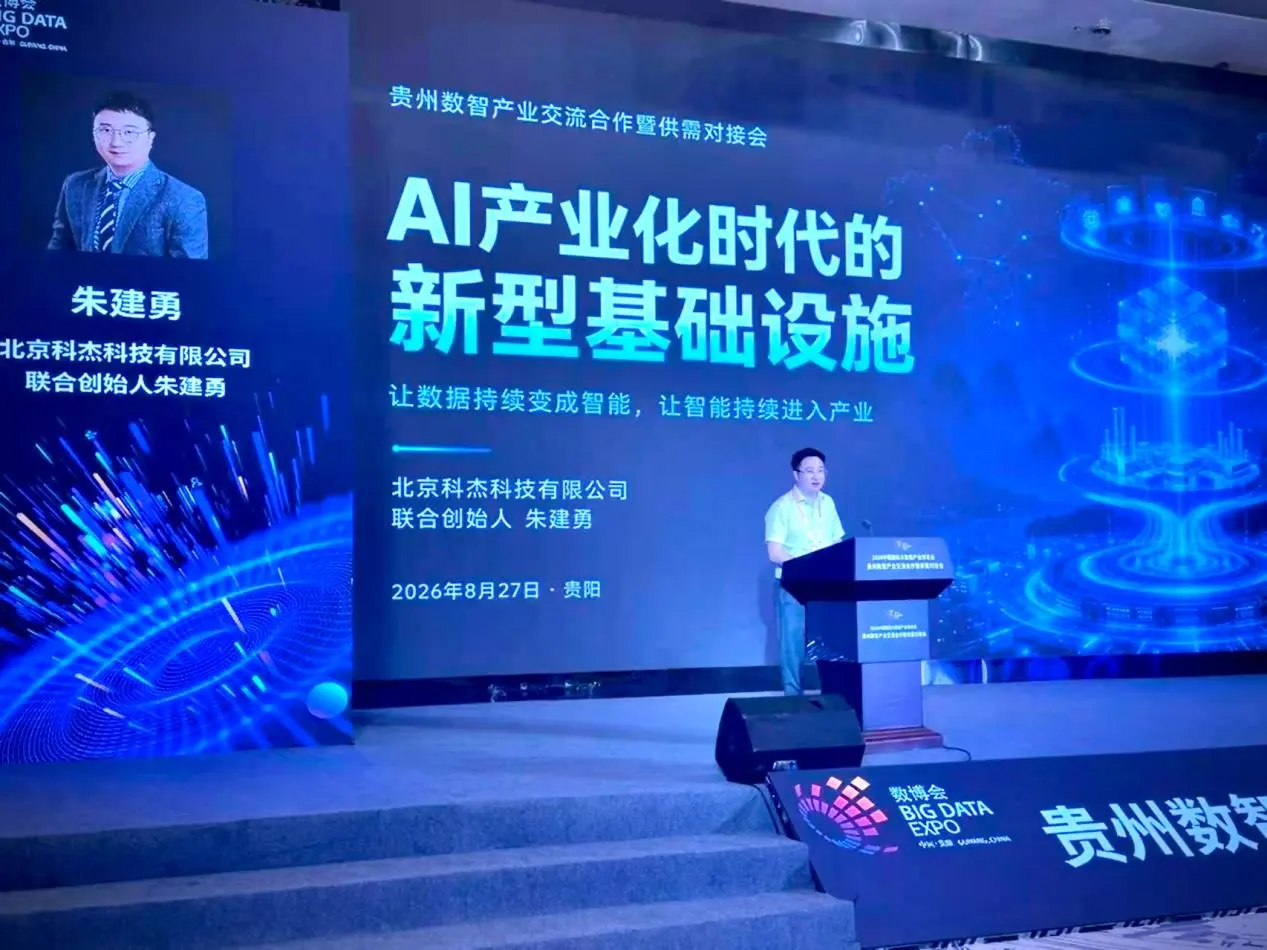
In Guizhou, multi-source industrial data is processed through the data factory into high-quality datasets, then passed through the model-data factory for model training, agent development, and embodied intelligence training, delivering industry-specific capabilities that are already being applied in energy, mining, and manufacturing, with new scenario data continuously feeding back into the cycle. Zhu emphasized that "high-quality data is produced in Guizhou, and AI capabilities are trained, validated, and iterated in Guizhou." With Guizhou as a launchpad, KeenData is helping build an AI industrialization infrastructure ecosystem through three pillars: dataset production, factory and scenario validation, and AI capability operations. KeenData plays three roles — infrastructure builder, industry capability connector, and ecosystem operations partner — to help more industrial innovation outcomes scale from Guizhou to the rest of the country, while laying a solid data foundation for the large-scale deployment of cutting-edge directions such as embodied intelligence.
Driving Digital Government from "Functionality" to "Intelligent Service" with Digital-Intelligence Synergy
When government data faces common challenges — multi-source heterogeneity, governance complexity, and a disconnect between AI applications and data governance — AI data infrastructure becomes a critical enabler for advancing digital government from "functional" to "intelligent service." At the "Digital Government" thematic forum, Zhu Jianyong participated in a roundtable discussion on "Empowering High-Quality Digital Government Development through Digital-Intelligence Synergy." Zhu noted that digital government has entered a new stage, where core competitiveness no longer hinges on the sheer volume of data, but on the ability to transform data into AI-callable resources and productive assets. The real challenge cities face in building government agents and models is not the capability of the models or the quantity of data, but the absence of data infrastructure suited to the AI era. KeenData believes that data infrastructure is needed to effectively integrate government, public, industrial, and multimodal data into structured resources, build high-quality datasets, train reserve models, and then empower government agents and applications, ultimately returning to frontline business scenarios to form a "data-model-agent" closed loop.
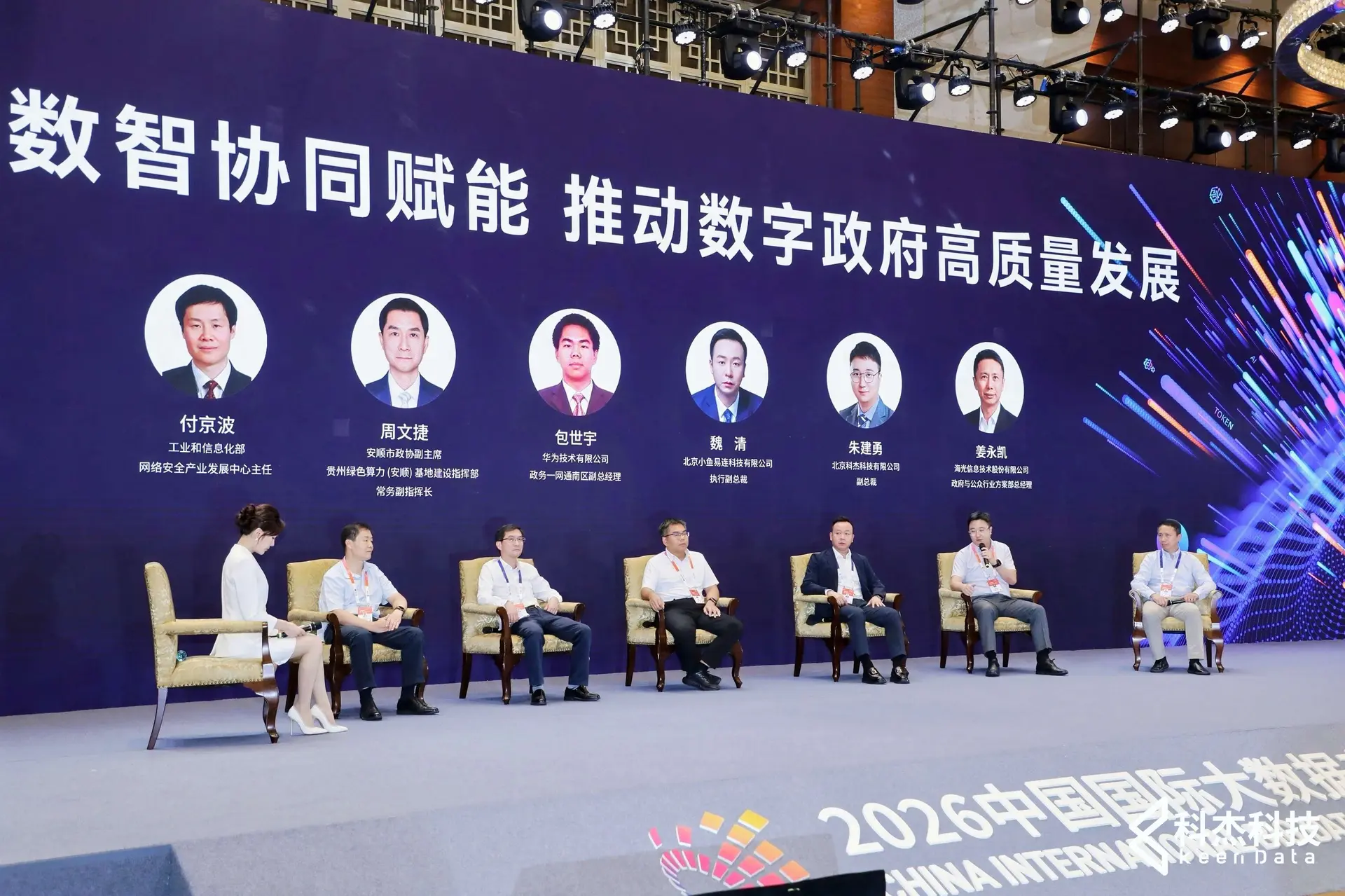
Zhu also shared KeenData's practical experience in digital government: in the Beijing AI Pilot Zone, KeenData contributed to building a city-level data foundation; in cities such as Hangzhou and Changsha, KeenData helped build trusted data spaces to facilitate the secure circulation and value realization of government and industrial data. He stressed that only by strengthening the underlying AI data infrastructure can the full value of government data elements be unlocked — improving administrative efficiency, governance effectiveness, and public services — and helping digital government evolve from "functionality" to "intelligent service."
Looking ahead, KeenData will continue to deepen its commitment to AI data infrastructure, collaborating with industry partners to drive data value realization and industrial intelligence, and making intelligence a true productive force for industry.
News & Updates
As AI Moves Toward Large-Scale Application, the Long-Term Value of Data Infrastructure Is Emerging
2026 Tomorrow.City · Shanghai Opens | KeenData Supports Global Urban Intelligent Evolution with AI Data Infrastructure
AI Global Competition Enters Data Depth | KeenData Invited to Singapore Industrial Cooperation Exchange Meeting